LivingReal

Living with Passion and Purpose

Browsing Posts in Fitness

Are you beyond thinking about coaching and ready to jump in?  Not everyone is actually ready to be coached or even ‘coachable’.  Not everyone is serious about creating a life of their own design, to make deliberate and conscience decisions that will make major +positive + changes to how they live and enjoy who they are and how they interact with the world around them.

“There’s a difference between interest and commitment.  When you’re interested in doing something, you do it only when circumstances permit. When you’re committed to something, you accept no excuses, only results.”  Art Turock

If you are ready – use the coment section below to contact me and we’ll set up a free phone session to give you a sense of where we can go together!

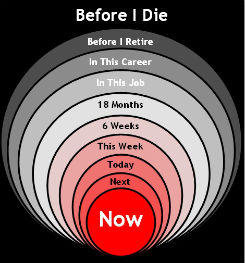
Do It Now!

I recently wrote (okay – I signed an on-line message that got sent) to my congressional representatives asking that the health care discussion not be lost in political in-fighting and party politics. Here is what I received back in an email from one of my senators:

Dear Mr. Fine:

Thank you for taking the time to share your thoughts about health care reform.  I have heard from thousands of Wisconsinites on this issue, and I want you to know that I understand both sides of the debate.  I would like to take this opportunity to let you know what is going on in the Senate regarding health.

Congress has been working together for over a year to change America’s health care system for the better.  On November 7, 2009 the House passed the “Affordable Health Care for America Act,” and on December 24, 2009 the Senate passed the “Patient Protection and Affordable Care Act.”  Work remains to be done before we pass a final health reform bill.  Now that both the House and Senate have passed their respective bills, we will be tasked with merging the two versions of health reform.  I hope we can come to a bipartisan solution to improve health care for all Americans and also in getting our economy back on track and more Americans back to work as soon as possible.

If you want to learn more about what I am working on regarding health reform, please visit my website at kohl.senate.gov for more information.

Thank you for your comments.  Feel free to contact my office again about issues that are important to you.

Sincerely,

Herb Kohl
United States Senator


Long-term consumption of high-glycemic foods may increase oxidative stress and the risk of chronic degenerative diseases.

Leading U.S. researchers recently concluded that a low-GI diet, not a low carbohydrate diet, appears to be beneficial in reducing the production of free radicals and oxidative stress.

Glycemic index (GI) is a measure of the rate that the carbohydrates in a food or meal are digested and appear in the blood as glucose (sugar). Glycemic load is a way of measuring the total carbohydrates in a meal or diet with a mathematical adjustment for GI. These measurements can be used to simultaneously describe the quality (glycemic index) and quantity of carbohydrate in a meal or diet.

Recent data suggest that the sudden rise in blood sugar associated with a high glycemic load may increase free radical production and the risk of oxidative damage. This increased production has been implicated in many disease processes including chronic heart disease, accelerated aging, and type 2 diabetes.

Investigators from several leading U.S. institutions recently investigated whether a diet with a high GI or GL is associated with greater oxidative stress by taking specific measurements in nearly 300 healthy adults.

Participants with a higher GI and GL diet were found to exhibit increases in oxidative stress when compared to those eating a diet lower in glycemic index and load.

Researchers concluded that chronic consumption of high-GI foods may lead to chronically high oxidative stress, increasing the risk for several degenerative diseases. A low-GI diet, not a low carbohydrate diet, appears to be beneficial in reducing oxidative stress.

American Journal of Clinical Nutrition, Vol. 84, No. 1, 70-76, July 2006.